Chess skewer for Kids: Complete Guide with Examples
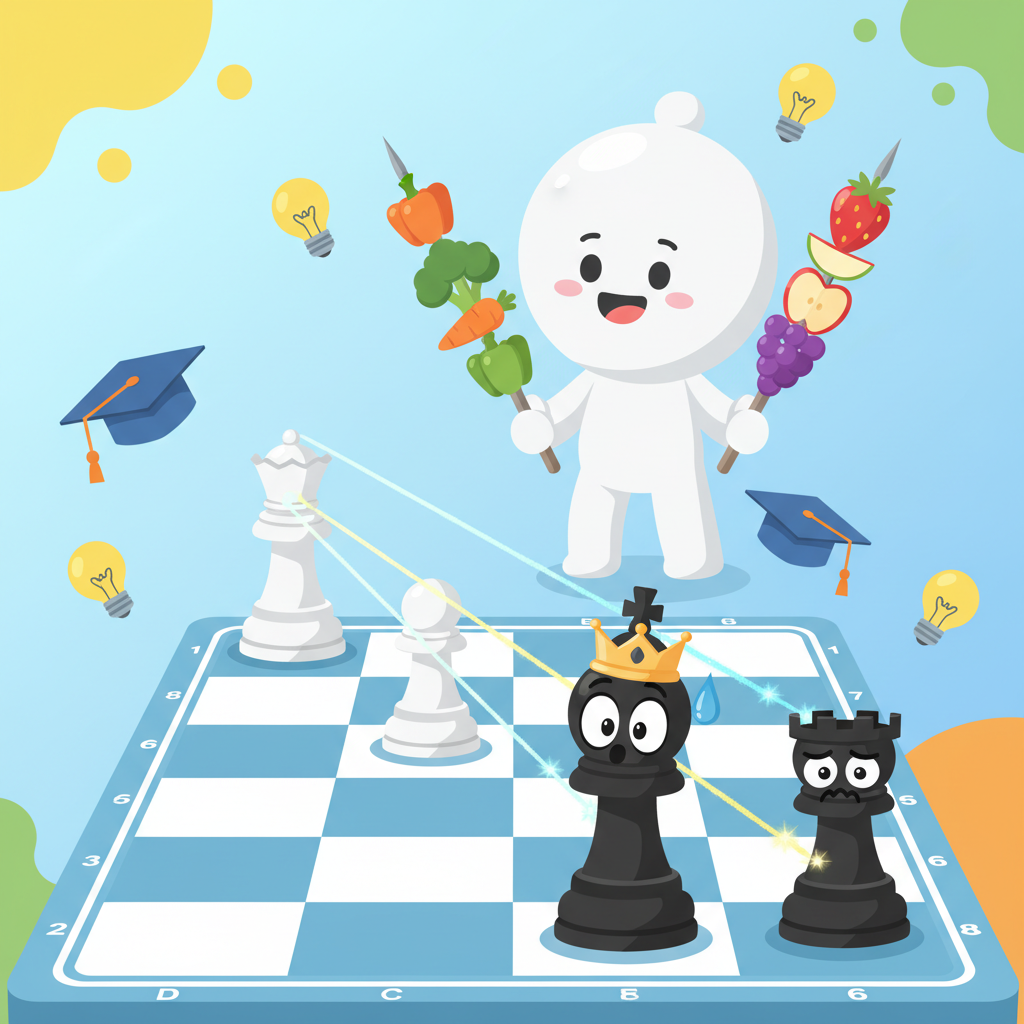
Unlock the Power of the Skewer: A Chess Tactics Adventure!
Want to become a chess master? One of the coolest things you can learn are chess tactics. These are sneaky moves that can win you material or even checkmate your opponent! In this post, we're going to explore one powerful tactic called the "skewer." Get ready to skewer your way to victory!
What is a Skewer?
Imagine a yummy kebab, also known as a skewer! Now imagine a chess piece “skewering” two other pieces! That’s basically what a skewer is in chess.
A skewer is a tactic where you attack two enemy pieces that are lined up on the same rank (row), file (column), or diagonal. The piece in front is usually more valuable than the piece behind it. You force the front piece to move, and then you capture the juicy piece that was hiding behind!
Why is this important? Because it can win you a piece, improve your position, and bring you closer to winning the game!
When does it appear in games? Skewers can pop up anytime, but you'll often see them in open positions where pieces have more space to move. Keep an eye out, especially when pieces are lined up!
How to Spot a Skewer
Learning to spot skewers is like being a detective! You need to look for specific clues. Here’s what to keep an eye out for:
- Lined-up Pieces: This is the biggest clue! Are two enemy pieces sitting on the same rank, file, or diagonal? If so, a skewer might be possible.
- Piece Value: The piece in front is usually more valuable than the one behind. Think Queen and then Rook. This makes your opponent want to move that valuable piece.
- Attacking Piece: Which of your pieces can attack both of these lined-up enemy pieces? Rooks, Queens, and Bishops are the usual suspects for these chess tactics patterns!
Discovering Chess Tactics Training opportunities
Board positions that allow skewers often have open ranks, files, or diagonals. This gives your pieces a clear path to attack. Check if your opponent's king is exposed. A skewer attacking the king is particularly powerful.
Piece combinations involved usually include a rook, queen, or bishop attacking pieces of greater or lesser value.
Step-by-Step Examples
Let's see the skewer in action with some examples!
Example 1: Basic Skewer
8   . . . . k . . .
7   . . . . p . . .
6   . . . . . . . .
5   . . . . . . . .
4   . . . . . . . .
3   . . . . . . . .
2   . . . . p . . .
1   . . . . K R . .
    a b c d e f g h

White to move
Solution: White plays 1. Re1+ This skewers the black King and pawn on the e-file. The King is forced to move. After the King moves, White will capture the pawn on e7.
Key Takeaway: Look for the opportunity to line up an attack on two pieces using a Rook, Queen, or Bishop.
Example 2: Intermediate Skewer
8   r n b q k b n r
7   p p p p p p p p
6   . . . . . . . .
5   . . . . . . . .
4   . . . . . . . .
3   . . . . . . . .
2   P P P P P P P P
1   R N B Q K B N R
    a b c d e f g h

Black to move.
This example might seem odd because it's the starting position, but imagine a scenario where the Black Queen ended up on d8 with a Bishop behind on c8 (perhaps after some pawn moves.) In such a position, if White had a Rook on d1, playing Rd1+ would skewer the Queen and Bishop.
Solution: Imagine after some moves the position becomes...
8   r n b . k b n r
7   p p p p p p p p
6   . . . . . . . .
5   . . . . . . . .
4   . . . . . . . .
3   . . . . . . . .
2   P P P P P P P P
1   R N B Q K B N R
    a b c d . e f g h

White's Rook is now on d1. White to move.
White plays 1. Rd1+ skewering the Black Queen and Bishop.
Key Takeaway: Skewers can happen at any time, even in the opening! Visualize the board and constantly evaluate threats.
Example 3: Advanced Skewer
8   . . . r k . . .
7   . . . p p . . .
6   . . . . . . . .
5   . . . B . . . .
4   . . . . . . . .
3   . . . . . . . .
2   . . . . K . . .
1   . . . . . . . .
    a b c d e f g h

White to move
Solution: White plays 1. Bc7 skewering the Rook and King. This looks like a check, but more importantly, it forces the rook to eventually be captured after the king moves.
Key Takeaway: Skewers don't always immediately win material. Sometimes, they improve your position and put your opponent in a tough spot!
Common Mistakes
Even super chess players make mistakes! Here are some common skewer slip-ups that kids often make:
- Missing the Line-Up: Forgetting to check if the pieces are actually lined up correctly. Make sure they are on the same rank, file, or diagonal.
- Ignoring Defense: Forgetting to check if the piece behind is defended! If your opponent can recapture after you win the piece, it might not be a good skewer.
- Tunnel Vision: Getting so focused on the skewer that you miss other, even better, moves! Always scan the whole board before you move.
How to avoid these errors? Simple: Double-check everything! Before you make your move, ask yourself: "Are the pieces REALLY lined up? Can my opponent recapture? Is there a better move?"
Practice Tips
Want to become a skewer master? Here’s how to train your skewer-spotting skills!
- Chess Puzzles Online: Use chess puzzles specifically focusing on skewer chess tactics training. These are great for getting your brain used to seeing the patterns.
- Puzzle Themes: Look for puzzles that involve pieces being lined up and opportunities for long-range attacks.
- Daily Practice: Even just 15 minutes a day can make a HUGE difference! Treat chess puzzles as your daily brain workout.
- Analyze Your Games: After you play a game, go back and look for missed skewer opportunities! Did you miss a chance to win a piece? Learn from your mistakes!
How CoachMyChess Helps
CoachMyChess is like having your own personal chess coach, available 24/7! Here's how it can help you become a skewer superstar:
- Weakness Detection: CoachMyChess can analyze your games and point out where you missed skewer opportunities. It identifies your weaknesses and creates a targeted training plan.
- Targeted Puzzle Practice: Get a personalized selection of chess puzzles online that specifically focus on skewer tactics. This helps you drill down on your weaknesses and improve your recognition skills.
- Progress Tracking: See how your skewer skills are improving over time! Track your progress and celebrate your victories.
Quick Reference Card
Here’s a handy checklist to help you spot skewers in your games:
- Are two enemy pieces lined up? (Rank, File, or Diagonal)
- Is the piece in front more valuable?
- Do I have a piece that can attack BOTH of them? (Rook, Queen, or Bishop)
- Can my opponent recapture the piece behind?
Key Patterns Summary:
- Lined-Up Pieces + Attacking Piece = Possible Skewer!
- Rooks, Queens, and Bishops are your skewer friends!
So, there you have it! You’re now armed with the knowledge to unleash the power of the skewer. Remember to practice, stay focused, and most importantly, have fun! And don't forget to check out CoachMyChess for awesome chess tactics training and personalized chess puzzles to supercharge your chess skills! Happy skewering!
Ready to see your child's chess progress?
Import games from Chess.com and get AI-powered insights in minutes.
Start FreeCoachMyChess Team
Built by chess parents, for chess parents. We're on a mission to make chess improvement visible and achievable for every family.